


The Zakopane style is one of the most distinctive trends in Polish architecture. It emerged at the end of the 19th century and is strongly associated with the culture of Podhale, representing a unique combination of traditional Highlander construction, elements of folk art, and the idea of creating a national architectural style in Poland. It is distinguished above all by the use of wood as the main construction material, rich ornamentation, and characteristic steep roofs that perfectly suit the climatic conditions of mountainous regions.
The origins of the Zakopane style
The Zakopane style emerged in the second half of the 19th century, during the period of the partitions, when Polish artists, architects, and intellectuals were intensively searching for elements of culture that could help build a sense of national identity. In the face of the lack of independence, initiatives aimed at creating an original architectural style of their own—one that would stand out from the dominant trends in Europe—took on particular significance.
Stanisław Witkiewicz as the creator of the style
Stanisław Witkiewicz is considered the creator of the Zakopane style—a painter, architect, and art critic who came to Zakopane in the 1880s. Fascinated by the culture of the Podhale highlanders and their traditional architecture, he recognized its great artistic potential. He noticed that the simple wooden cottages had a coherent and distinctive character that could be developed into a fully fledged architectural style of nationwide significance.
The first building in the Zakopane style
The first building designed in the Zakopane style was Villa Koliba in Zakopane, built in 1892–1893 for Zygmunt Gnatowski. This building became a model for subsequent projects and marked the beginning of the development of the entire movement. To this day, Villa Koliba is regarded as one of the most important symbols of this style and a testament to its origins.
The region where the Zakopane style occurs
The Zakopane style is primarily associated with the Podhale region, and its most important center remains Zakopane. It was there that the greatest number of buildings representing this movement were created, and the town became the center of its development and popularization. Architecture in this style was especially popular among artists and the intelligentsia, who came to the Tatra Mountains in large numbers.
Podhale as the center of the style
The largest concentration of buildings in the Zakopane style can be found in Zakopane, but also in nearby towns such as Kościelisko, Poronin, and Bukowina Tatrzańska. These buildings served a variety of functions—from villas and guesthouses to summer houses—and often combined functionality with a representative architectural form. Over time, the Zakopane style also began to appear in other regions of Poland, especially in spa and tourist resorts. Its elements can be seen, among other places, in Kraków, Wisła, Krynica-Zdrój, and Nałęczów, where it was used mainly in recreational and guesthouse architecture.
The most important monuments of the Zakopane style
There are many buildings in Zakopane that are excellent examples of the Zakopane style. Some of them were designed directly by Stanisław Witkiewicz, while others were created under his clear influence, continuing the idea he initiated.
Villa Koliba
Villa Koliba is the first building in the Zakopane style and at the same time one of its most important monuments. It currently houses a museum devoted to this movement. The building stands out for its rich wooden ornamentation and well-thought-out architectural composition, which combines tradition with an innovative approach.
Villa Pod Jedlami
Villa Pod Jedlami is one of the most impressive examples of the Zakopane style. Designed by Witkiewicz for the Pawlikowski family, it impresses with its monumental form and exceptionally rich ornamentation, which emphasizes its representative character.
The chapel in Jaszczurówka
The Chapel of the Sacred Heart of Jesus in Jaszczurówka is an example of the use of the Zakopane style in sacred architecture. Its construction and decorations clearly refer to traditional Highlander art, which is why it is regarded as one of the most beautiful wooden sacred buildings in Poland.
The characteristic features of the Zakopane style
The Zakopane style is easily recognizable thanks to a set of distinct features that stem directly from inspiration drawn from the folk architecture of Podhale and from adapting buildings to mountain conditions.
Wooden construction of buildings
The basic material used in construction was wood, primarily spruce and larch. This raw material was readily available in the region and performed well in harsh climatic conditions, providing durability and proper insulation.
Steep roofs
One of the most characteristic features of the Zakopane style is its high, steep roofs, which allow snow to slide off quickly. This design was not only practical but also gave the buildings a distinctive appearance.
Rich ornamentation
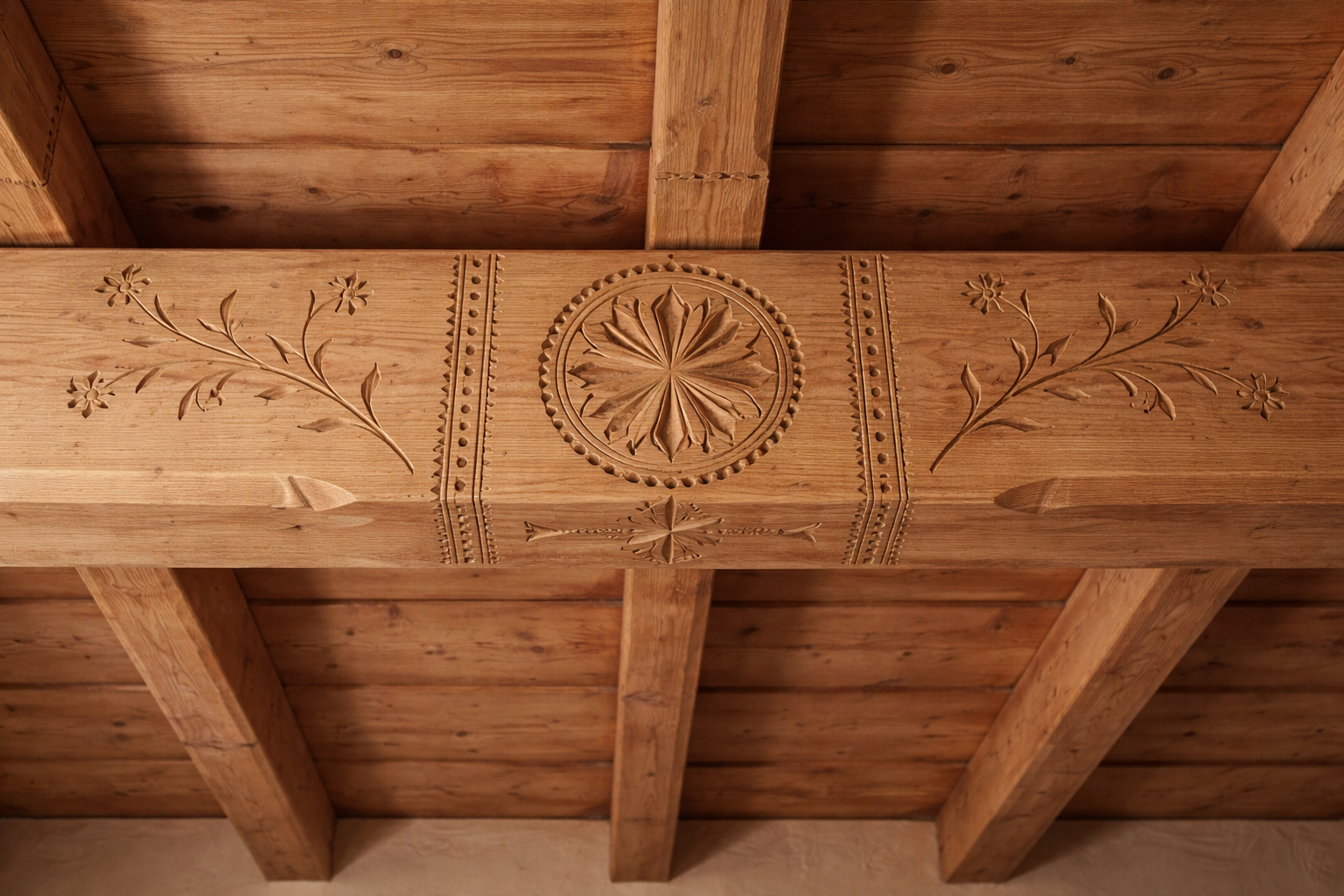
An important element of the Zakopane style is its rich wooden decoration. The ornaments were inspired by folk art and often took the form of plant motifs, geometric patterns, and the characteristic parzenica design. Decorations appeared on beams, balustrades, door frames, and structural elements of the buildings.
Verandas and balconies
The buildings were often equipped with extensive balconies and verandas, which served both practical and decorative functions. Carved balustrades and structural details further emphasized the aesthetics of the entire structure.
Stone foundations
The lower parts of the buildings were made of stone, which increased the stability of the structure and protected the wooden elements from moisture. This solution was particularly important in mountain conditions.

The significance of the Zakopane style in culture
The Zakopane style played an important role in shaping Polish cultural identity during the period of the partitions. It was seen as a conscious attempt to create a national architectural style that drew on local traditions while also having nationwide ambitions. At that time, Zakopane became an important center of artistic life, attracting numerous creators inspired by Highlander culture.
The influence of the Zakopane style was visible not only in architecture, but also in applied art, furniture making, interior decoration, and folk design. To this day, it remains one of the most recognizable elements of Polish cultural heritage.
Summary
The Zakopane style is a unique architectural movement that was born at the end of the 19th century in Zakopane thanks to the work of Stanisław Witkiewicz. It combines traditional Highlander construction with the idea of creating a national style, and is distinguished by its wooden structure, steep roofs, rich ornamentation, and characteristic architectural details.
The greatest number of examples of this style can be found in Podhale, especially in Zakopane, where such buildings as Villa Koliba, Villa Pod Jedlami, and the chapel in Jaszczurówka are located. To this day, the Zakopane style remains an important element of Polish architecture and culture, serving as a testament to the rich tradition of the region and the efforts to create a unique national identity.


