

Introduction
Prefabrication is a concept that has been appearing more and more frequently in discussions about home construction in recent years. For some investors, it sounds modern and promising; for others, it remains a term that is not entirely clear, naturally raising questions about durability, quality, and economic viability. It is worth emphasizing, however, that prefabrication is neither a passing trend nor a technological experiment. It is a construction method that has long been established in the building industry, and its growing popularity in single-family housing stems from very specific and practical reasons.
Changing economic conditions, rising labor costs, a shortage of skilled construction crews, and increasing investor expectations regarding quality and predictability mean that the traditional construction model is not always the most optimal solution. Prefabrication fits into these shifts as a natural response to the need for greater control over the building process and for the stability of a structure’s technical parameters.
What is prefabrication in practice?
Prefabrication is a construction approach in which the key structural elements of a house are produced off-site, in a specialized manufacturing facility rather than directly on the building site. This does not mean the creation of “standardized” or universal houses, but the fabrication of components individually tailored to a specific design. Based on the technical documentation, walls, floors, roof elements, or even entire building segments are manufactured and later transported to the site for final assembly.
The defining characteristic of prefabrication is therefore not merely factory production, but the precise planning of the entire project. Before installation begins, the building design is developed in detail, and individual technical solutions are determined in advance. This model differs significantly from traditional construction, where many decisions are often made during the building process itself.
In practical terms, prefabrication involves shifting the most technologically demanding stages of construction into a controlled production environment. As a result, the process becomes more repeatable, predictable, and less susceptible to random external factors.
Why is prefabrication gaining importance?
The growing interest in prefabrication is not accidental. Modern construction is increasingly moving toward standardization, quality control, and process optimization. Similar shifts have long been observed in other industries, where production in controlled environments enables consistent performance and high repeatability. Construction, although inherently more complex, is following the same direction.
For individual investors, this primarily means greater predictability. Building a house becomes less of a lengthy and difficult-to-estimate undertaking and more of a structured, organized process. Prefabrication does not eliminate risks entirely, but it significantly reduces them — particularly those related to project timelines and cost stability.
Key advantages of prefabrication
One of the most noticeable benefits of prefabrication is the reduced project completion time. Building components can be manufactured simultaneously with foundation works, which in practice shortens the overall construction period. The on-site assembly phase is typically fast, allowing investors to avoid the many months of work characteristic of traditional construction. A shorter timeline not only enables earlier occupancy but also reduces indirect costs and limits risks associated with market fluctuations.
Another significant advantage is improved budget predictability. Prefabrication requires a precise definition of the scope of work and materials at an early stage, greatly reducing the likelihood of uncontrolled cost increases. In traditional construction, design changes, execution adjustments, and material price volatility often lead to substantial budget deviations. With prefabrication, many of these variables are determined in advance.
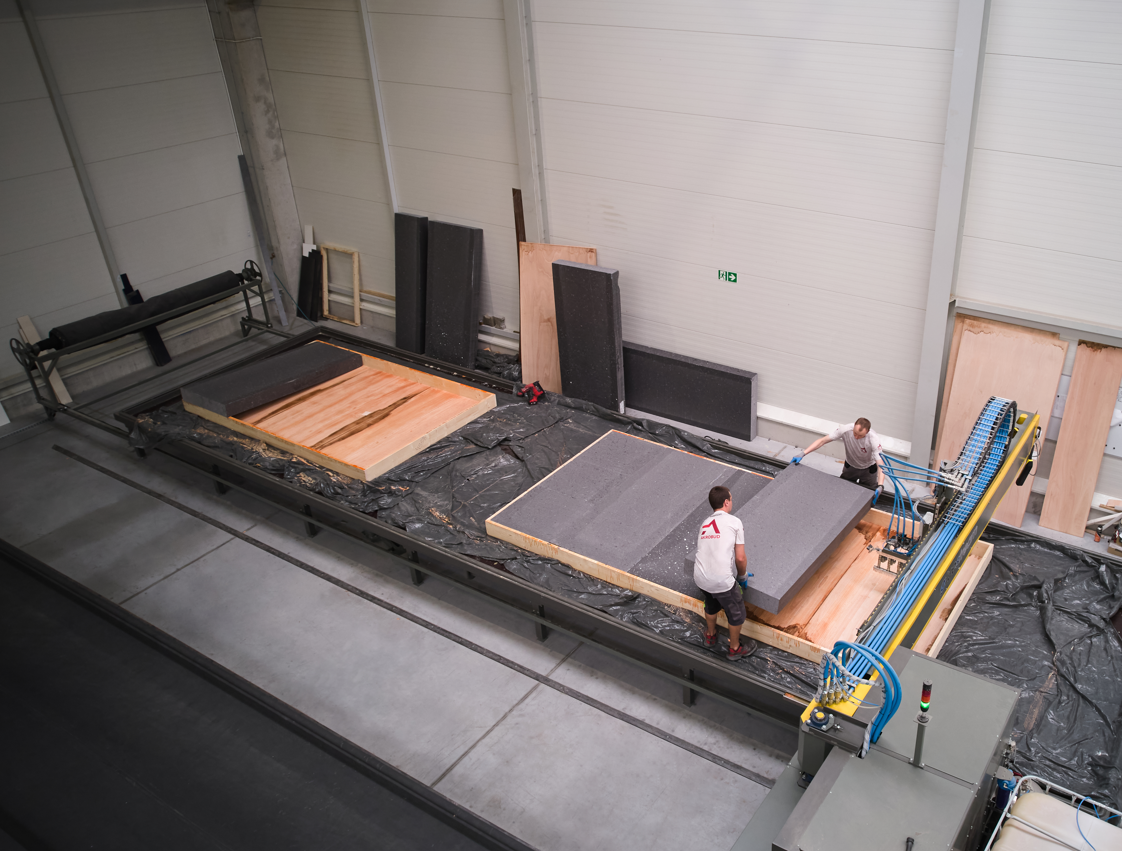
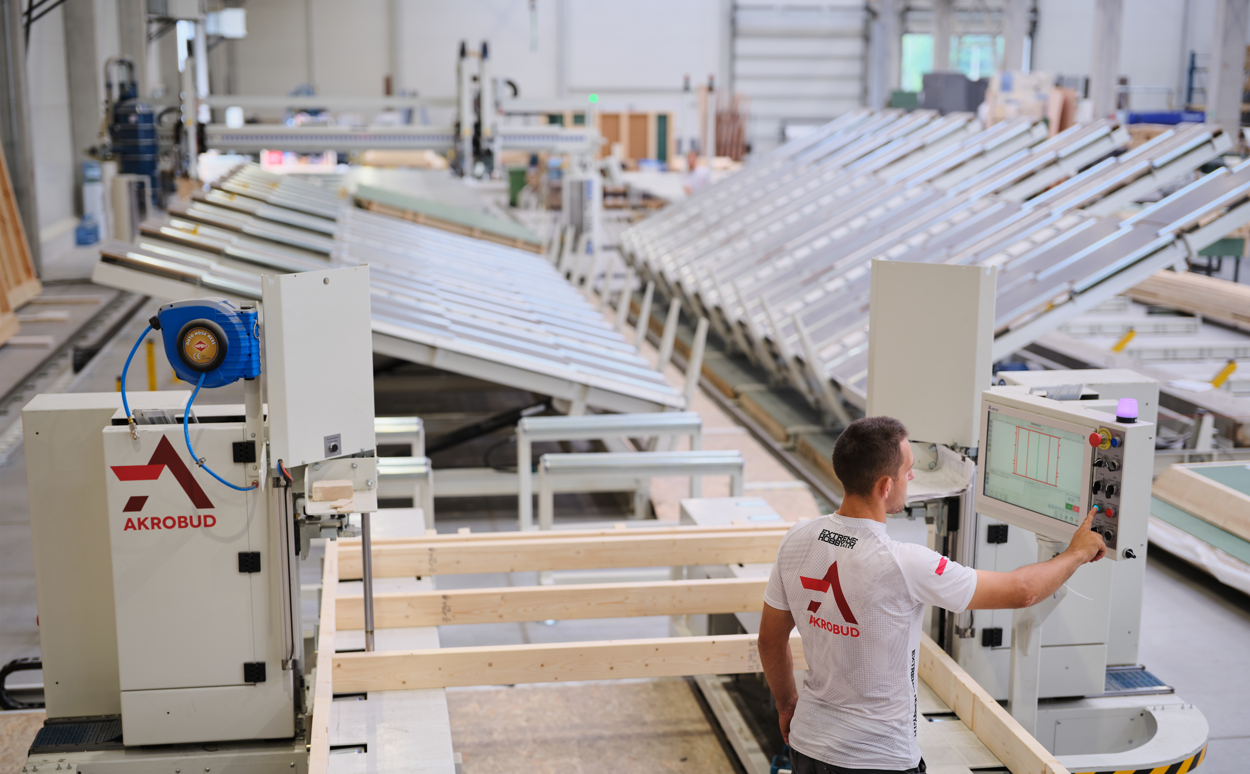
Quality of workmanship is equally important. Manufacturing elements in controlled environments ensures high precision and consistency of technical parameters. Structural components are produced using modern technologies and advanced machinery, resulting in greater accuracy and better component fit. This approach minimizes the risk of errors caused by weather conditions, on-site improvisation, or variability in manual work quality.
Prefabrication also supports better organization of the construction process. Fewer activities carried out directly on-site mean shorter crew presence, reduced construction waste, and less disruption to the surroundings. For investors who value order and predictability, these factors often represent meaningful practical advantages.
Does prefabrication have limitations?
Prefabrication, like any construction technology, has its own specific characteristics. One of the key requirements is the need for thorough planning at the design stage. Changes during the execution phase are possible, but they are generally less flexible than in traditional construction. In practice, however, this approach encourages a more deliberate design process and reduces the risk of costly modifications.
Another aspect involves the transportation of components to the building site. Prefabricated elements are delivered in defined dimensions, which in rare cases may require an assessment of site access conditions or installation logistics. It should be emphasized, however, that situations genuinely preventing the use of prefabrication are exceptional and can typically be identified during the planning phase.
These factors are better understood not as disadvantages, but as inherent features of the technology that call for appropriate design and logistical preparation.
Who benefits most from prefabrication?
Prefabrication can be applied across a wide range of construction projects, but it is particularly advantageous for those who value predictability, budget control, and an efficient building process. It is an appealing solution for investors who expect clearly defined schedules and stable technical performance of the finished structure.
Prefabricated technology also aligns well with the needs of individuals seeking modern, energy-efficient solutions. The high precision of component manufacturing and the ability to implement advanced material systems support the achievement of excellent functional and thermal performance.
Prefabrication is used not only in single-family housing, but also in larger-scale developments, where process standardization and repeatability play a crucial economic role.
Summary
Prefabrication is not a simplification of construction, but rather a technological reorganization of the building process. Shifting key stages into a controlled production environment increases predictability, quality, and overall efficiency. For investors, this translates into greater control over project timelines, costs, and the technical performance of the building.
In the context of today’s construction market, prefabrication is becoming an increasingly rational and practical solution. It does not replace all building technologies, but in many cases it effectively responds to the needs of investors seeking a modern, structured, and predictable approach to home construction.